
 (888) 265-9114
When teens practice the right skills,
things can get better.
In a 6-year study of 47 teens and young adults in our outpatient program, participants showed a significant reduction in suicidal ideation over their first year of treatment, with the largest gains in the first six months. Participants also reported gains in reasons for living and reductions in depressive symptoms. Here’s what we found, and an honest look at what it does and doesn’t tell us.
Year Study
ADOLESCENTS
YEAR OF CARE
CLINIC
Depressive Symptoms
Lower is better | scale 0-27

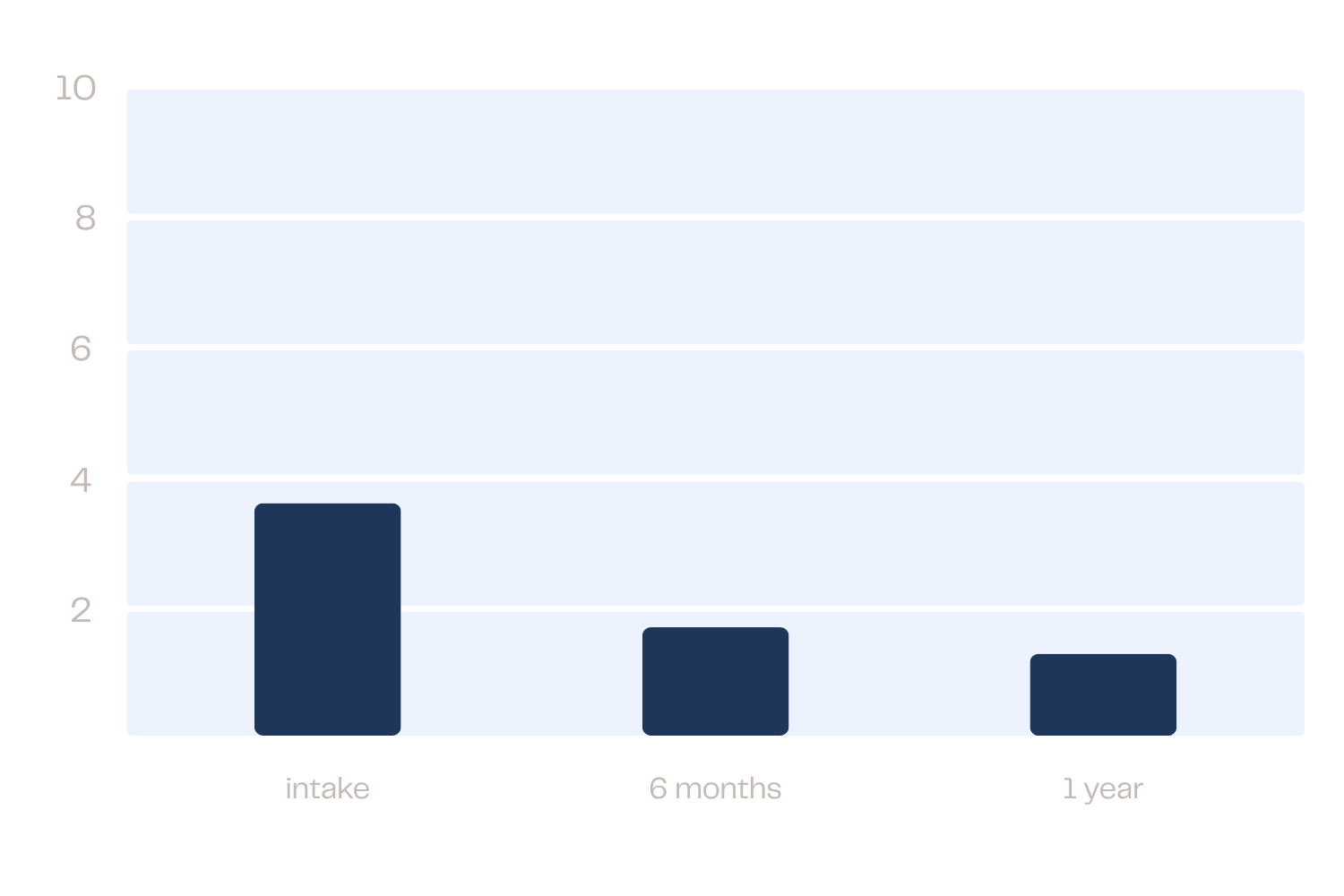
Suicidal Thoughts
Lower is better | scale 0-10
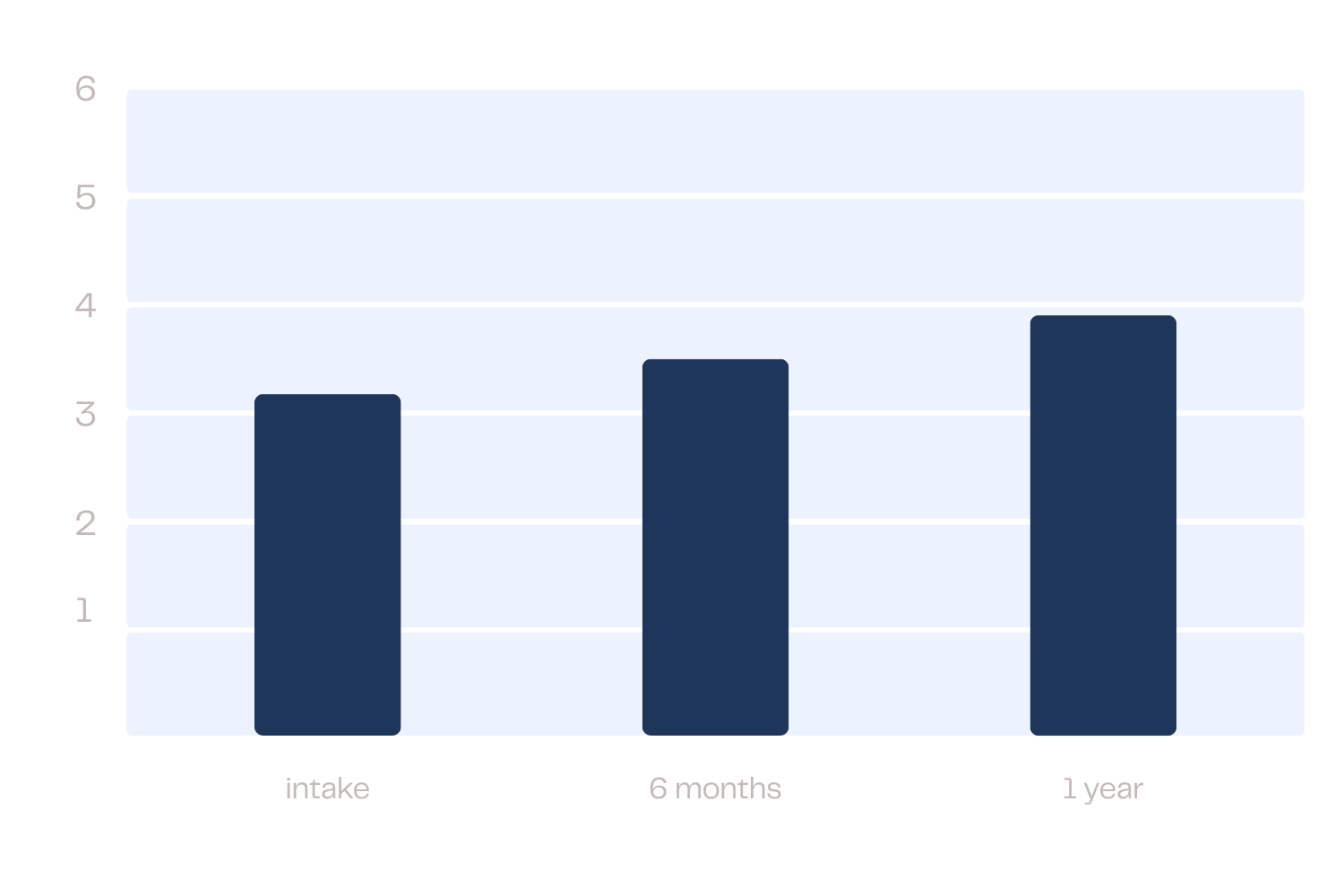
Reasons for Living
Higher is better | scale 1-6
What we looked at
Compass is a DBT-LBC™ certified program, which means we deliver Dialectical Behavior Therapy the way the research says it should be done.
DBT for adolescents teaches young people practical skills:
How to get through an emotional crisis without making things worse.
How to manage intense feeling.
How to handle conflict and relationships.
We wanted to test an idea: does individualized skills coaching, focused on behavioral rehearsal and troubleshooting barriers, improve treatment outcomes?
To find out:

We added dedicated one-on-one sessions, 45 to 60 minutes each, in which a coach works with a teen to practice DBT skills until they feel usable in everyday life.

We then looked at outcomes across the first year of treatment for 47 teens and young adults.
What we found
Over the first year, the adolescents and young adults in our program showed real, measurable improvement in three areas:
Fewer suicidal thoughts
Participants reported a significant decrease in suicidal ideation across the year. This was the clearest finding in the study, and the one most strongly linked to skills coaching — participants who attended more skills-coaching sessions showed larger reductions.
Stronger reasons for living
Participants reported gains in hope for the future, connection to their support systems, and self-worth, measured using the Reasons for Living Inventory for Adolescents.
Reduced depressive symptoms
Participants reported reductions in depressive symptoms such as low mood, fatigue, and loss of interest.
Here’s what we found most promising: participants who attended more skills-coaching sessions tended to show greater early reductions in suicidal thoughts. This suggests that focused, repeated practice is a key factor in the progress teens and young adults make during treatment.
A transparent look at our findings
This was a small, preliminary study at a single outpatient clinic, without a comparison group. We cannot claim that skills coaching caused these improvements — only that participants who engaged in it experienced meaningful progress.
A few things worth knowing. Everyone in the study had some level of suicidal ideation when they started; participants who reported none at intake were not included in the analysis. Not everyone completed assessments at every point — 47 participants completed intake measures, 39 at six months, and 27 at one year. Our study group was primarily female and white, and nearly all families used private insurance, so these results may not reflect every teen’s experience. Participants also received the full range of DBT services alongside skills coaching, so some of the improvement may reflect the additional treatment time rather than the coaching itself.
We did not find a statistically significant link between the amount of skills coaching a participant received and their change in reasons for living or depressive symptoms. The skills-coaching effect we can point to is specific to suicidal ideation.
We share these findings because they are genuinely encouraging, and because we believe in being forthcoming about what the research does and does not indicate.
What this might mean for your family
If your teen is currently participating in DBT, we encourage you to ask their treatment team: “How are the skills being taught in group being generalized to the real world?” That transition — from skills training to daily life — is the heart of what we studied.
Whatever path you are on, remember that progress in DBT typically builds steadily over months. A hard week does not erase the work you have done; recovery is rarely a straight line, and every step forward counts.
If you need support right now
Watching your child struggle is one of the hardest things a parent can face. You don’t have to navigate it alone, and reaching out is a sign of strength.
988 |
Call or text 988 to reach the 988 Suicide & Crisis Lifeline, available 24/7. |
741741 |
Text HOME to 741741 to reach the Crisis Text Line. |
911 |
If there is immediate danger, call 911 or go to your nearest emergency room. |
Talk with our team
If you’d like to explore whether DBT for adolescents could help your family, we’re here to listen — no pressure, just a conversation.